

Weijin TechnologyOne stop manufacturer for PCBA&SMT surface mount processing
-

-

-
+86 13410351150
Weijin TechnologyOne stop manufacturer for PCBA&SMT surface mount processing
+86 13410351150
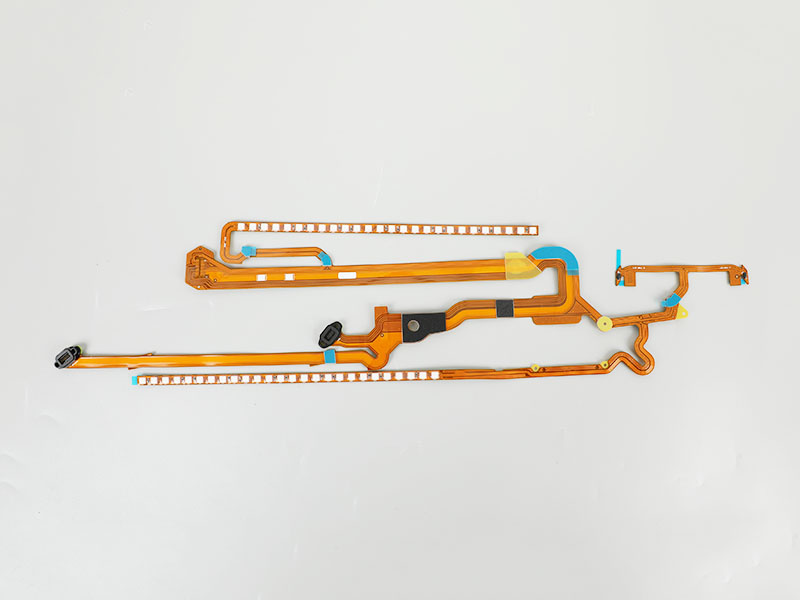
The selection of PCBA thickness is a critical step in the design of electronic products, directly impacting mechanical strength, signal integrity, thermal dissipation efficiency, and cost structure. Different application scenarios have significantly varying requirements for PCBA thickness, necessitating a comprehensive consideration of functional needs, structural constraints, and manufacturing processes to achieve a balance between performance and cost.
Mechanical strength is the fundamental consideration in thickness selection. For devices that need to withstand mechanical stress, such as industrial controllers and automotive electronic modules, thicker PCBA boards (2.0mm and above) provide higher resistance to bending and vibration. Such equipment may experience impacts or prolonged vibration during operation; insufficient board thickness can easily lead to solder joint fatigue fracture or loosening of component leads. Conversely, consumer electronic products like smartphones and wearable devices, due to limited internal space and lower mechanical stress, typically use thin boards of 0.8-1.6mm to meet compact structural requirements while reducing overall weight. During design, finite element analysis should be used to simulate mechanical stress distribution and determine the minimum safe thickness, avoiding over-engineering that increases costs.
Signal integrity requirements impose constraints on thickness selection. During high-frequency signal transmission, the dielectric thickness of the PCBA directly affects characteristic impedance and signal attenuation. For high-speed digital circuits or RF modules, the matching relationship between board thickness and dielectric constant must be strictly controlled to ensure signal transmission stability. For example, PCBA boards in 5G communication equipment often use thicknesses of 1.0-1.6mm, optimizing layer stack structures and dielectric materials to keep signal loss within allowable ranges. Improper thickness selection may lead to impedance mismatch causing signal reflection, or excessive dielectric loss causing signal attenuation, affecting communication quality. During the design phase, simulation tools should be used to calculate signal transmission parameters, providing a theoretical basis for thickness selection.
Thermal dissipation requirements are an important variable in thickness selection. PCBA boards densely populated with power devices, such as power modules and LED driver boards, require increased board thickness to enhance heat dissipation efficiency. Thicker boards (above 1.6mm) can accommodate thicker copper foil, enhancing the heat conduction path from components to heat sinks. Additionally, more thermal vias can be designed inside thick boards, forming three-dimensional heat dissipation channels and reducing thermal resistance. For low-power devices, such as sensors and audio modules, thin boards (0.8-1.2mm) are sufficient to meet heat dissipation needs and can reduce material usage and processing costs. Thermal design should combine thermal simulation analysis to evaluate temperature rise curves under different thicknesses and determine the optimal solution.
Manufacturing process and cost constraints also influence thickness selection. During PCBA processing, board thickness is closely related to process parameters such as drilling accuracy, lamination uniformity, and etching capability. Excessively thick boards may increase drilling difficulty, leading to excessive hole wall roughness; overly thin boards are prone to deformation during lamination, affecting layer alignment accuracy. Furthermore, board thickness is positively correlated with cost per unit area, as thicker boards require more material and higher processing energy consumption. During design, a trade-off must be made between performance requirements and manufacturing costs, prioritizing standardized thicknesses (such as 0.8mm, 1.2mm, 1.6mm) while meeting functional needs, to reduce supply chain management complexity and overall costs.
PCBA thickness selection represents a comprehensive trade-off involving mechanical, electrical, thermal management, and economic factors. Designers must clarify core performance indicators based on the product's application scenario, and through simulation analysis and process verification, determine a thickness solution that meets functional requirements while offering cost advantages, laying the foundation for reliable operation of electronic products.

No. 501, Industrial North Area, Xinhé Community, Fuhai Subdistrict, Bao'an District, Shenzhen City, Guangdong Province, China