

Weijin TechnologyOne stop manufacturer for PCBA&SMT surface mount processing
-

-

-
+86 13410351150
Weijin TechnologyOne stop manufacturer for PCBA&SMT surface mount processing
+86 13410351150
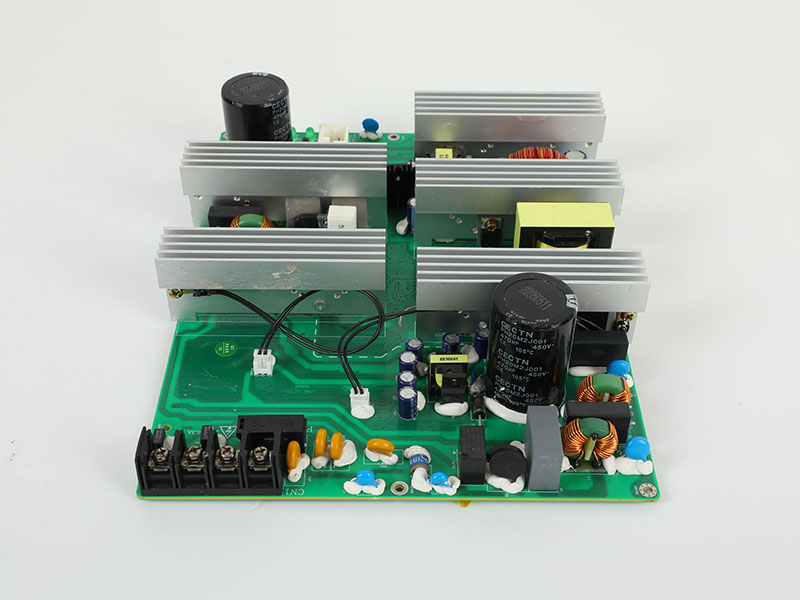
During the production of PCBA boards, copper surface oxidation is a critical issue affecting circuit reliability. Copper, as the core material for conductive layers, suffers from reduced conductivity due to surface oxidation, leading to poor soldering and even signal degradation during long-term use. From raw material storage to processing stages and post-treatment processes, systematic control measures are required to interrupt the oxidation chain and ensure the copper surface remains clean over time.
Protection during raw material storage serves as the first line of defense against oxidation. Copper foil rolls, before processing, must be stored in a dry, sealed environment. Controlling humidity below 30% effectively inhibits oxidation reactions. Storage containers should be made of moisture-proof materials with anti-oxidation coatings applied to inner walls to prevent direct contact between copper and air. For opened copper foil, packaging bags should be filled with nitrogen and sealed, using inert gas to isolate oxygen and moisture. A factory comparison once revealed that copper foil stored in humid environments for one week without special treatment developed a surface oxide layer three times thicker, while nitrogen-packaged equivalent material showed almost no change in oxidation layer thickness.
Oxidation control during processing must run through the entire production workflow. After PCB etching processes, copper surfaces become exposed to air and require immediate anti-oxidation treatment. Traditional methods employ Organic Solderability Preservatives (OSP), forming a transparent protective film on copper surfaces through chemical coating—this both prevents oxidation and ensures subsequent soldering wettability. For high-precision circuits, Electroless Nickel Immersion Gold (ENIG) processes can deposit a nickel-phosphorus alloy layer on copper surfaces, then cover with a thin gold layer. This offers superior oxidation resistance and conductivity compared to OSP, albeit at relatively higher costs. Processing equipment requires regular cleaning maintenance to prevent residual etchant or cleaning agents from corroding copper surfaces. Workstations should have anti-static mats installed to reduce electrostatic adsorption of dust during operations.
Pre-treatment before soldering is critical for oxidation interruption. Prior to wave soldering or reflow soldering, PCBA boards require preheating treatment with temperatures controlled at 100-120°C—this removes surface moisture while uniformly activating anti-oxidation coatings. For boards using OSP processes, preheating time must be strictly limited to within 3 minutes to prevent high-temperature coating decomposition. During soldering, flux selection directly impacts oxidation control effectiveness. Rosin-based fluxes offer moderate activity, removing copper oxide layers instantly during soldering while forming protective films against secondary oxidation. Water-soluble fluxes facilitate easy cleaning but require thorough residue removal after soldering—otherwise, moisture absorption may trigger oxidation.
Post-treatment protection requires establishing long-term preservation mechanisms. After soldering completion, PCBA boards should undergo conformal coating application as soon as possible—using acrylic, silicone resin, or polyurethane materials to form dense protective layers on surfaces, isolating oxygen, moisture, and corrosive gases. Coating processes must achieve uniform coverage without bubbles, with edge areas requiring focused application to prevent oxidation infiltration through gaps. For PCBA boards requiring long-term storage, vacuum packaging with desiccants can control environmental humidity below 10%, slowing oxidation progression.
From storage to processing, soldering to post-treatment, PCBA board copper oxidation control demands establishing comprehensive protection systems across entire workflows. Through environmental controls, process optimization, and material upgrades, copper surface oxidation resistance can be significantly enhanced, providing reliable guarantees for stable electronic equipment operation.

No. 501, Industrial North Area, Xinhé Community, Fuhai Subdistrict, Bao'an District, Shenzhen City, Guangdong Province, China