

Weijin TechnologyOne stop manufacturer for PCBA&SMT surface mount processing
-

-

-
+86 13410351150
Weijin TechnologyOne stop manufacturer for PCBA&SMT surface mount processing
+86 13410351150
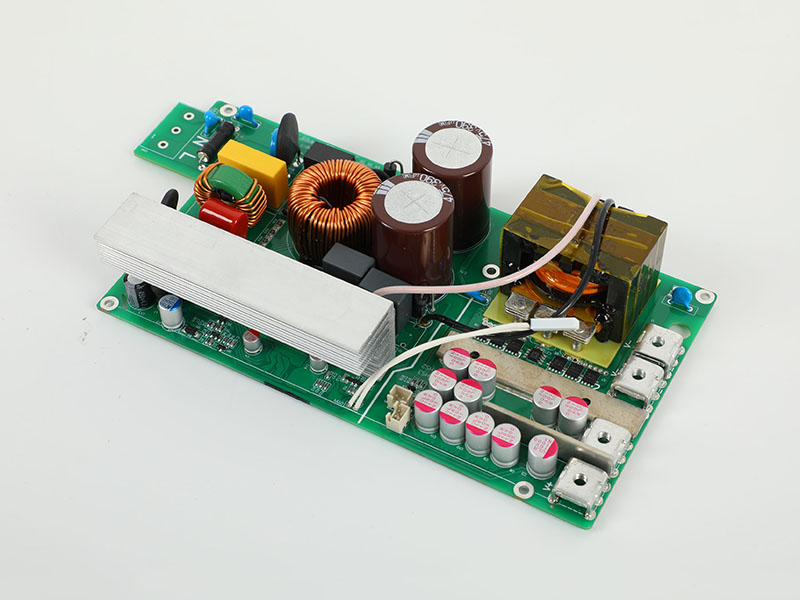
PCBA Design for Manufacturability (DFM) review is a critical step in the electronic product development process. Its core objective is to reduce defect rates and costs in the manufacturing stage, and improve product yield and production efficiency through proactive design optimization. An effective DFM review must cover four key dimensions: design specifications, process compatibility, assembly feasibility, and testability. Through a systematic inspection process and cross-departmental collaboration, it ensures a seamless transition of the design from blueprint to mass production.
Design specification review is the fundamental basis of DFM. It is essential to verify that component placement meets process requirements. For example, the spacing between high-density components must satisfy minimum safety distance standards to prevent bridging during soldering. Large components (such as inductors, transformers) need to be positioned away from the board edge to avoid solder joint cracking caused by mechanical stress during depaneling. For bottom-terminated components like BGAs and QFNs, it is necessary to confirm that the pad design matches the package dimensions, with pad pitch errors controlled within ±0.05mm to ensure uniform solder ball melting during reflow. Additionally, the clarity and reasonable placement of silkscreen markings must be reviewed to avoid assembly errors caused by ambiguous labels.
Process compatibility review requires evaluation based on specific manufacturing capabilities. Equipment parameters (such as pick-and-place machine accuracy, reflow soldering temperature profiles) vary across different production lines, so the design must align with the process window of the target line. For instance, for lines using lead-free soldering processes, it must be confirmed that component temperature resistance meets the peak temperature requirement of 260°C to prevent internal damage from high heat. For through-hole components intended for wave soldering, lead length must be checked against solder immersion depth standards to avoid insufficient soldering due to leads being too short. The review should also consider auxiliary aspects like flux residue and cleaning processes, ensuring the design does not introduce additional cleaning difficulties or corrosion risks.
Assembly feasibility review needs to simulate the actual production scenario. For manually assembled interfaces (such as USB, HDMI), the insertion and removal direction must be checked against the available operational space to avoid assembly difficulties caused by insufficient clearance. For modules requiring screw fixation, screw hole locations must be verified to ensure they avoid critical traces, preventing damage to copper foil during drilling. In automated assembly scenarios, the feasibility of component pickup by the placement nozzle must be assessed; for example, the pickup surface of oddly-shaped components needs to be flat to prevent pick-up errors due to unstable suction. Furthermore, the dimensions and shape of the PCBA must conform to the production line's transport requirements—boards that are too large may get stuck in the conveyor rails, while very small boards may require dedicated carriers for fixation.
Testability review directly impacts mass production testing efficiency. It is essential to ensure that test points (such as ICT test points, boundary scan points) are located near the board edge or in easily accessible areas to prevent insufficient test coverage due to probe inaccessibility. For high-frequency signal test points, sufficient isolation space must be预留 to avoid signal crosstalk during testing. Functional test interfaces (such as JTAG, UART) should be designed in a unified area with clear markings to reduce test equipment switching time. Additionally, the review must verify that necessary debugging interfaces (such as LED indicators, DIP switches) are预留, enabling rapid fault localization during the mass production phase.
DFM review requires establishing a cross-departmental collaboration mechanism, involving participation from structural, hardware, process, and test engineering teams. Using tools such as design specification checklists and process risk assessment forms, potential issues are systematically identified. The review results must form a closed feedback loop, with the design team adjusting the方案 based on recommendations until all high-risk items are resolved. Through proactive DFM review, product development cycles can be significantly shortened, board revision costs during mass production reduced, providing a strong foundation for the high-quality delivery of electronic products.

No. 501, Industrial North Area, Xinhé Community, Fuhai Subdistrict, Bao'an District, Shenzhen City, Guangdong Province, China