

Weijin TechnologyOne stop manufacturer for PCBA&SMT surface mount processing
-

-

-
+86 13410351150
Weijin TechnologyOne stop manufacturer for PCBA&SMT surface mount processing
+86 13410351150
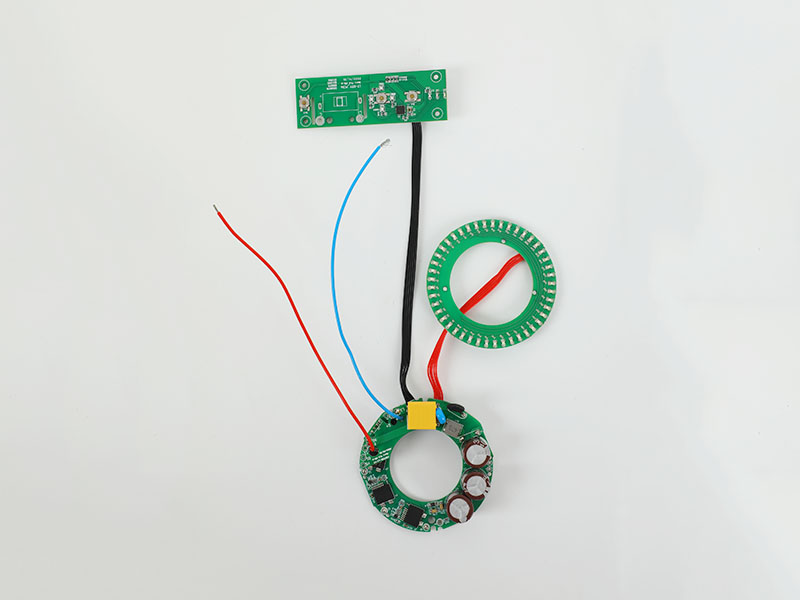
As a core component of electronic products, the PCBA board directly impacts product performance and reliability. To ensure stable operation of PCBA boards in complex environments, multi-dimensional inspection methods are required to comprehensively evaluate their performance. The following systematically outlines key PCBA board inspection methods, ranging from basic visual inspection to in-depth reliability testing.
Basic visual inspection serves as the first checkpoint for quality control. Traditional visual inspection relies on operator experience, using magnifying glasses or microscopes to observe details such as component polarity, solder joint morphology, and PCB surface scratches. Although this method is low-cost, the identification of minor defects is susceptible to subjective factors. The introduction of Automated Optical Inspection (AOI) addresses this challenge by utilizing high-resolution cameras to capture PCBA images and algorithmically comparing them against standard templates, enabling rapid identification of defects such as component misalignment, poor solder joints, and bridging. Inspection efficiency is several times higher than manual methods, making it particularly suitable for high-volume production scenarios.
Electrical performance testing focuses on circuit functionality verification. In-Circuit Testing (ICT) uses probes to contact test points, accurately identifying open circuits, short circuits, and component parameter deviations, achieving fault coverage rates exceeding 90%. Flying Probe Testing replaces fixed fixtures with flexible probes, enabling test point-free design through software programming, significantly reducing testing costs for small-batch production. Functional Testing (FCT) simulates real-world operating scenarios by inputting excitation signals to the PCBA and monitoring output responses, verifying whether core functions such as communication modules and power management meet specifications. For example, when performing FCT on a PCBA containing a Bluetooth chip, data transmission rate, anti-interference capability, and power consumption performance must be tested.
For hidden solder joints such as BGA and QFN, X-ray inspection becomes a critical method. Utilizing the穿透特性 of X-rays to generate 2D or 3D tomographic images, it clearly reveals internal defects like voids, cracks, and bridging within solder joints. A medical device PCBA once experienced signal interruption due to internal voids in BGA solder joints; X-ray inspection detected and enabled repair beforehand, avoiding the risk of batch recall. Although the equipment cost for this technology is relatively high, its inspection capability for high-density packaged components is irreplaceable.
Environmental adaptability testing simulates extreme usage conditions to evaluate long-term PCBA reliability. High-temperature high-humidity testing places the PCBA in an environment of 70°C and 90% RH for continuous operation, verifying its resistance to湿热 conditions. Salt spray testing uses atomized 5% sodium chloride solution to assess the corrosion resistance of metal components. Vibration testing simulates transportation vibrations, ensuring components remain securely attached without loosening or detachment under X, Y, and Z axial vibration. During vibration testing of an automotive electronics PCBA, fatigue cracking was discovered at a capacitor pin solder joint; after optimizing the pad design, it passed the test, significantly enhancing product durability.
Accelerated life testing shortens test cycles by applying intensified environmental stresses. For instance, placing the PCBA in an environment of 85°C and 85% RH under continuous power-on operation allows estimation of its service life under normal conditions using the Arrhenius model. An industrial control PCBA underwent 1000 hours of high-temperature aging testing, which proactively identified the risk of electrolyte leakage from electrolytic capacitors, providing data support for design improvements.
From visual screening to in-depth reliability verification, PCBA inspection requires constructing a multi-level testing system. Enterprises should select appropriate methods based on product application scenarios: consumer electronics focus on a combination of AOI and FCT, automotive electronics require enhanced vibration and salt spray testing, and medical devices need dual scrutiny through X-ray and life testing. Through systematic inspection processes, product failure rates can be effectively reduced, laying a solid foundation for the stable operation of electronic equipment.

No. 501, Industrial North Area, Xinhé Community, Fuhai Subdistrict, Bao'an District, Shenzhen City, Guangdong Province, China